AION 2 Abyss PvP Guide: Abyss Points, PvP Gear, Sieges & Tips
AION 2 Abyss PvP Guide: Abyss Points, PvP Gear, Sieges & Tips
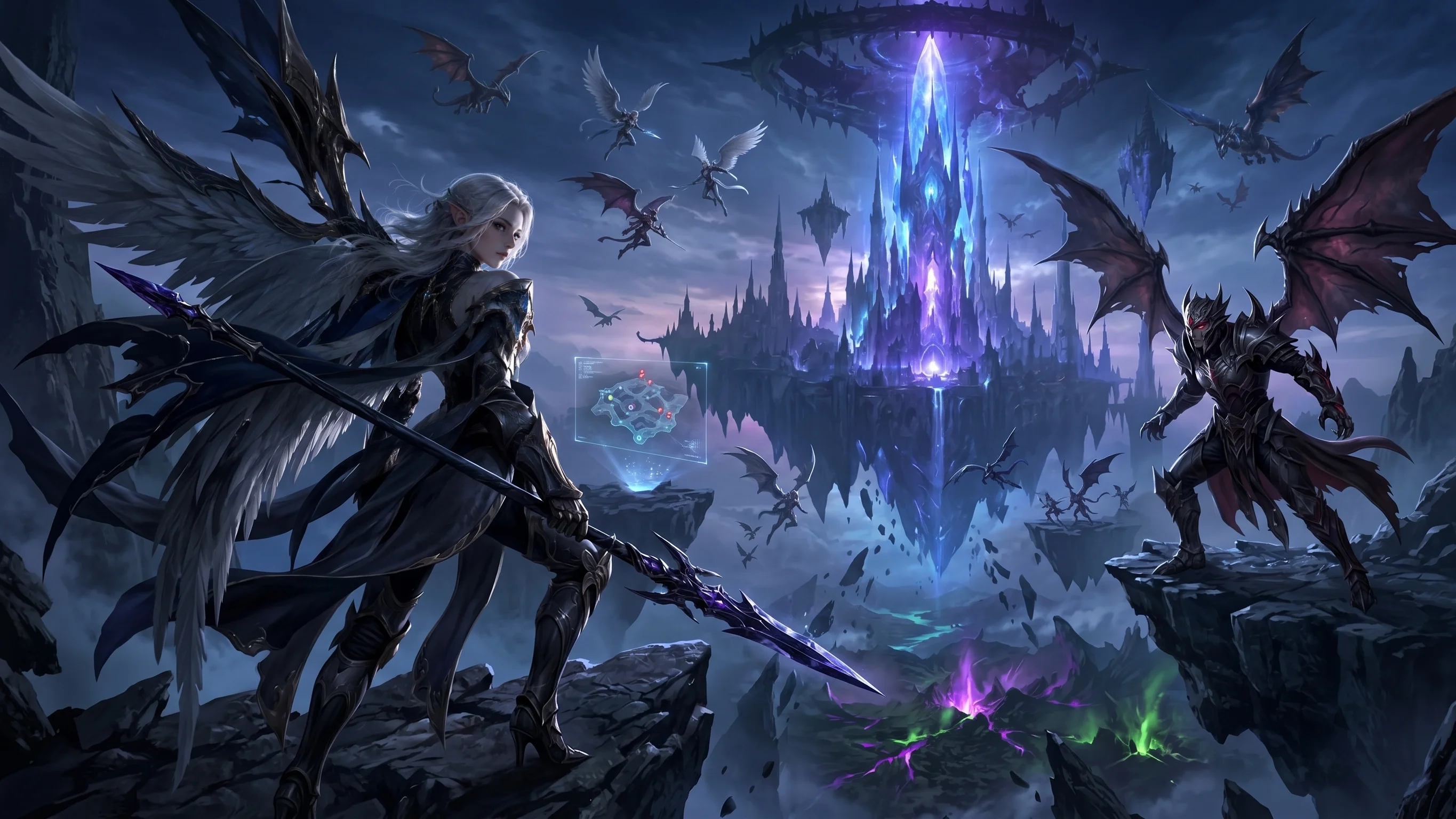
The Abyss is where AION 2 shifts from normal open-world progression into serious faction PvP. It is not simply another zone filled with stronger monsters. Elyos and Asmodians compete for objectives, bosses, Abyss Points and progression rewards while dealing with the constant threat of the opposing faction.
For the current Global version, Lower Reshanta is the main accessible Abyss area, with entry tied to level and Gear Score requirements. The activity is also time-limited, which makes preparation important. Going into the Abyss without a plan can waste a large part of your available playtime, especially when your goal is to farm Abyss Points or improve your PvP gear.
This AION 2 Abyss PvP guide explains how the Abyss works, what you should farm, how Artifact Sieges and bosses fit into your weekly routine, which types of classes perform well in large-scale fights, and how to get more value from every trip into Reshanta.
AION 2 Abyss at a Glance
Feature | What You Need to Know |
|---|---|
Main area | Lower Reshanta |
Entry level | Level 45 |
Gear requirement | Around 1,000 Gear Score |
Main currency | Abyss Points |
Main activities | PvP, directives, Artifact Sieges, bosses, weekly missions and Abyss activities |
PvP style | Large-scale faction PvPvE |
Combat | Ground and aerial combat |
Main progression | Abyss Points, PvP gear and rank-related progression |
Time limitation | Current Global setup provides limited weekly Abyss access |
The exact requirements and reward structures can change between regions and patches, so use your current Global client as the final reference for exact values. This is particularly important when reading older AION 2 guides written around the KR or TW versions.
For more context on the differences between regional versions, see the AION 2 Global vs KR/TW guide.
Claim your first-visit discount now
What Is the Abyss in AION 2?
The Abyss is AION 2's main faction-based PvPvE environment. Unlike normal open-world zones, you should expect enemy faction players to be part of the experience rather than an occasional interruption.
The zone combines several different activities. You can fight other players, complete Abyss directives, participate in Artifact Sieges, help kill bosses, complete weekly objectives and earn Abyss Points along the way. This creates a progression loop where PvP and PvE are constantly connected.
That combination is what makes the Abyss interesting. You might enter the zone intending to complete a simple objective, only to find your faction fighting over an Artifact. A boss can turn into a large-scale faction battle within seconds, while a seemingly safe farming route can suddenly become dangerous because another group is moving through the same area.
A good Abyss player therefore needs more than damage. Positioning, awareness, movement, group coordination and knowing when not to fight are just as important.
AION 2 Abyss Requirements
The current Global progression structure places Lower Reshanta behind two major requirements: level 45 and roughly 1,000 Gear Score.
That means the Abyss should generally be treated as endgame content rather than something you rush into immediately after character creation. You need enough character progression to survive the environment, and stronger gear becomes especially important because Abyss PvP is not simply a normalized battleground where every player has identical power.
Reaching level 45 is therefore only part of the preparation. Your equipment, skills, Stigmas, consumables and movement options all affect how useful you will be in a real faction fight.
Players who are still working toward 45 can use the AION 2 Leveling Guide 1-45 to plan the fastest route and prepare for the transition into endgame.


Why Abyss Points Matter
Abyss Points, usually shortened to AP, are one of the most important progression currencies associated with the Abyss.
You earn AP through a combination of PvP and PvE activities, then use it for Abyss-related rewards and progression. That makes the currency useful even for players who are not interested in becoming dedicated PvP players.
Common AP sources include enemy player kills, Abyss directives, weekly missions, bosses, Artifact Sieges and other Abyss activities. The most efficient approach is usually to combine objectives instead of treating each source as a completely separate grind.
For example, if you have a directive that rewards AP for defeating enemies and another objective connected to an Abyss boss, try to plan your route so both are completed during the same trip. The same principle applies to faction objectives and weekly missions.
Abyss Points are also connected with PvP gear progression, so players who intend to spend a lot of time in the Abyss should think about AP as part of their long-term character development rather than simply another currency to collect.
Players who would rather skip part of the weekly AP grind can use the AION 2 Abyss Points farming service.
Abyss Points vs PvP Rank Progression
One important distinction is that Abyss Points and rank-related progression are not necessarily the same thing.
AP is the currency you farm and spend on progression, while ranking systems can track your competitive standing separately. This means you should not judge your entire Abyss progress by AP alone.
If your main goal is PvP gear, concentrate on consistent AP gains and the activities that fit your available time. If you also care about ranking, then deaths, positioning, objective control and your overall performance become more important.
The exact rank structure and associated rules can change with game updates, so avoid relying on an old tier list or guide that assumes an earlier regional version.
How AION 2 Abyss PvP Works
The easiest way to understand Abyss PvP is to think of it as objective-based faction warfare rather than a giant deathmatch.
Killing players is useful, but chasing kills should not become your main objective. Objectives, bosses and faction control create the situations where large groups meet, and that is where the Abyss becomes most valuable.
A typical session can involve moving with your group, completing a directive, helping secure an Artifact, fighting enemy players around the objective and then moving toward another target. The strongest players are not always the ones with the highest kill count. Players who know where their group needs to be and when to disengage can have a much bigger impact.
Aerial combat makes this even more important. AION 2's vertical movement gives fights another dimension, allowing players to attack from above, reposition vertically and escape encounters through the air. Watching only what happens on the ground is an easy way to get caught by a player approaching from an unexpected angle.
Artifact Sieges
Artifact Sieges are one of the main large-scale activities in Lower Reshanta.
These battles revolve around controlling an Artifact while the two factions fight for the objective. Once large groups arrive, the fight becomes less about individual kills and more about formation, focus fire, healing and positioning.
The most important rule is simple: fight around the objective.
There is little value in chasing an enemy player halfway across the map while your faction loses control of the Artifact behind you. A player who escapes with low health is sometimes less important than maintaining your position and keeping your healers alive.
Large groups also need to respect the game's vertical combat system. Holding the area below an Artifact is not enough if the enemy controls the airspace around it. Ranged classes, healers and mobile players can become vulnerable quickly when opponents attack from several directions.
Artifact Sieges are much easier when you are part of an organized party or clan. Solo players can participate, but coordinated groups can communicate targets, protect support classes and react much faster when the battlefield changes.
AION 2 Abyss Bosses
Abyss bosses add the PvE side of the zone, but they rarely remain pure PvE encounters for long.
Because both factions want the rewards, a boss can attract players from both sides at the same time. This means your group has to solve two problems simultaneously: damage the boss and survive the enemy faction.
The safest strategy is to treat the surrounding PvP situation as seriously as the boss itself. Keep an eye on enemy movement, protect healers and avoid committing every defensive or offensive cooldown to the boss when an enemy push is clearly coming.
A common mistake is to tunnel the boss while ignoring the opposing faction. A fast boss kill does not help much if your group gets wiped immediately before the reward is secured.
For smaller groups and solo players, Abyss bosses can sometimes be more approachable than organized Artifact Sieges because the battlefield is less structured. The tradeoff is that the encounter can become chaotic very quickly.
What Gear Should You Bring Into the Abyss?
Abyss PvP is progression-based, so gear matters.
This is one of the biggest differences between the Abyss and normalized PvP environments. A player with significantly stronger equipment and character progression can have a real advantage over someone who has only just reached the entry requirements.
That does not mean you need perfect equipment before entering. It means you should avoid treating the minimum entry requirement as your ideal target.
Before spending serious time in the Abyss, make sure your main equipment is appropriate for your class, your important skills are functioning properly and your character has enough survivability to stay alive during prolonged fights.
Consumables also matter more than many new players expect. A fight rarely happens under perfect conditions, and the ability to recover, escape or survive a burst can be the difference between keeping your group together and returning to your respawn point.
Best AION 2 Classes for Abyss PvP
The strongest class for a large-scale Abyss battle is not always the same class that performs best in a small PvP encounter.
Abyss fights reward AoE pressure, healing, crowd control, mobility and sustained team utility. Classes that provide something useful to the entire group can become extremely valuable during Artifact fights and boss encounters.
Cleric and Chanter
Support classes are extremely important in faction warfare.
Healing, buffs, debuffs and utility allow a group to stay in a fight longer and recover from enemy pressure. Protecting your healers should therefore be one of your highest priorities.
A coordinated group with reliable support can continue fighting after a weaker group would already be forced to retreat.
Templar and Gladiator
Frontline classes are well suited to objective fights because they can absorb pressure, disrupt enemy formations and create opportunities for the rest of the group.
Their role is not simply to deal damage. They help establish the frontline and make it harder for enemy players to freely attack vulnerable ranged characters or healers.
Ranger, Sorcerer, Spiritmaster and Chanter
Backline classes benefit from the space created by frontline players.
AoE damage, ranged pressure and control abilities become particularly valuable when many enemy players are grouped around an objective. Their effectiveness depends heavily on positioning because they become easy targets when they move too far ahead of the group.
Assassin
Assassins can still be dangerous in the Abyss, but their role is more specialized.
Instead of standing in the center of a large faction clash, an Assassin can look for isolated targets, vulnerable backline players or opportunities to eliminate an important enemy before escaping.
This means Assassins can contribute a lot, but they generally need to be more selective about when and where they fight.
Overall, there is no single class that makes the Abyss automatically easy. Team composition, player skill and coordination have a major impact on large-scale PvP performance.
AION 2 Abyss PvP Tips
The biggest improvement most players can make is to stop thinking of the Abyss as a kill farm.
Stay close to your group unless you have a clear reason to move away. A player who gets isolated can be focused quickly, especially when multiple enemies arrive at once.
Protect your healers. Losing one support player can reduce your group's effective fighting power immediately, while keeping healers alive allows your frontline and ranged damage dealers to continue operating.
Do not waste mobility skills just to secure a low-health target. Flying aggressively toward an enemy can look like an easy kill, but the player may be baiting you away from your group. Save movement abilities for situations where they actually create value.
Always pay attention to vertical positioning. AION 2's aerial combat means an enemy is not limited to approaching from the direction you can see on the ground.
Fight around objectives. A group that wins a meaningless chase but loses an Artifact has not really won the engagement.
Manage cooldowns carefully. Large faction battles can last long enough that using everything in the opening seconds leaves you with nothing available when the most important part of the fight begins.
Finally, learn when to disengage. Not every enemy needs to die. Sometimes the correct play is to retreat, regroup and return with your full party rather than spending several minutes chasing one player across Reshanta.
How to Spend Your Limited Abyss Time Efficiently
Because Abyss access is limited, your weekly plan matters.
Before entering, check your available directives and identify which activities can be combined. Ideally, one route should complete multiple objectives instead of sending you across the map repeatedly.
Prioritize activities that provide several benefits at once. A boss encounter that contributes to a weekly objective while rewarding AP is more efficient than spending the same amount of time looking for isolated PvP kills.
The same principle applies when choosing fights. An unnecessary engagement can consume time, cooldowns and consumables without providing meaningful progression.
Think of each Abyss session as a short progression run. Enter with a purpose, complete the highest-value objectives available to you and leave once the useful work is finished.
Preparing Your Character Before Abyss
The best time to prepare for Abyss PvP is before you need it.
Reaching level 45 and meeting the Gear Score requirement gives you access, but it does not guarantee that your character is ready for sustained faction warfare.
Your broader progression systems matter as well. Empyrean Traces, Sealed Dungeons and Strongholds contribute to different parts of character development, so completing them can help close progression gaps before you spend significant time in PvP.
Our AION 2 Empyrean Traces, Sealed Dungeons & Strongholds Guide explains how these systems fit together and when each one is worth prioritizing.
Players who are still building their character from level 1 can also use the AION 2 Character Leveling service to reach the endgame stage faster.
Is the AION 2 Abyss Worth Doing?
For players interested in PvP progression, the Abyss is one of the most important areas to learn.
It provides a combination of faction warfare, PvE bosses, objective battles and Abyss Point progression that you cannot get from normal quest zones. Even players who are not focused entirely on PvP can benefit from understanding how the system works because the rewards and progression are connected to the broader character-building process.
The important thing is to approach the Abyss with realistic expectations. It is not a casual zone where you can ignore gear, positioning or group play. Stronger players will have advantages, organized groups will usually outperform disconnected solo players, and wasting time on unnecessary fights can make your limited access much less productive.
Once you understand the objective structure, however, the zone becomes far more manageable.
Final AION 2 Abyss PvP Strategy
The best Abyss players are not necessarily the ones who chase the most kills. They are the players who understand what their faction is trying to accomplish and contribute to that goal.
Build your character before worrying about serious PvP progression. Enter the Abyss with enough Gear Score, useful skills and appropriate consumables. Plan your objectives before you fly into Lower Reshanta, and use your weekly time on activities that provide meaningful progression.
During faction fights, stay with your group, protect support players, control the airspace around objectives and avoid wasting time on enemies who are already escaping. Artifact Sieges and bosses should be approached as team encounters, while solo PvP should be treated as an opportunity rather than the main reason to ignore the objective.
Most importantly, remember that the Abyss is part of a larger AION 2 progression system. Leveling, gear, Daevanion progression, collectibles and PvP development all work together. The stronger your overall character becomes, the easier it is to make your limited Abyss time count.
AION 2 Abyss PvP FAQ
What level do you need to enter the AION 2 Abyss?
The current Global setup requires level 45 and approximately 1,000 Gear Score for Lower Reshanta. Exact requirements can change with updates, so check the current version of the game before planning your entry.
What are Abyss Points used for in AION 2?
Abyss Points are a major currency for Abyss-related progression and can be used toward PvP gear and other rewards. They are earned through a combination of PvP and PvE activities.
What is the best way to farm Abyss Points?
The most efficient approach is usually to stack several objectives together. Complete directives, weekly missions, bosses, Artifact activities and PvP objectives in a way that minimizes unnecessary travel and downtime.
Is Abyss PvP gear normalized?
No. Abyss progression is gear-based, so character progression and equipment can have a significant effect on combat performance.
Are Artifact Sieges important?
Yes. Artifact Sieges are one of the main large-scale faction activities in Lower Reshanta and reward players who focus on objective control rather than chasing individual kills.
Are Abyss bosses PvE or PvP?
They are effectively PvPvE encounters. You fight the boss while also dealing with the opposing faction, which means positioning and group awareness are just as important as boss damage.
Which classes are strongest in the Abyss?
Large-scale fights generally reward classes that provide healing, AoE damage, crowd control, durability and mobility. Clerics, Chanters, Templars, Gladiators and ranged AoE-focused classes can all be valuable, while Assassins are better suited to selective backline pressure.
Should I play solo in the Abyss?
You can, but coordinated groups are generally much better for objectives, Artifact Sieges and faction fights. Solo players can still farm objectives, complete missions and look for favorable PvP opportunities.
How much Abyss time do you get each week?
The current Global setup provides limited weekly Abyss access, with the commonly documented limit being around eight hours. Because this system can be adjusted by updates, it is worth checking the current in-game timer before planning your weekly route.
What should I do before entering the Abyss?
Reach the required level and Gear Score, improve your main gear, prepare your skills and consumables, and work on supporting progression systems such as Empyrean Traces, Sealed Dungeons and Strongholds. A broader progression route will make the Abyss grind much more comfortable.