Monsters & Memories Tradeskills Guide for Beginners
Monsters & Memories Tradeskills Guide: Getting Started with Crafting
Tradeskills add another layer of progression to Monsters & Memories, giving players ways to gather resources, process raw materials, manufacture equipment, and create useful supplies for their adventures across Aêthoril. Instead of relying entirely on monster drops and equipment found while exploring, you can develop skills that turn collected resources into items with practical value. The challenge is learning which profession deserves your time, what materials to keep, and how to make crafting work alongside your character's regular progression.
Getting started does not require mastering every profession. A better approach is to understand how gathering, refining, and crafting connect, then focus on one useful goal. You might want to produce consumables for your own character, prepare materials for a more advanced crafting discipline, or trade resources with other players. Each approach can be worthwhile, provided you understand the costs and requirements before committing your currency.
Monsters & Memories is in Early Access, so available skills, recipes, and individual crafting requirements may change with updates. Treat specific recipes and training costs as something to verify in the current game rather than assuming every older guide remains accurate.
How Tradeskills Work in Monsters & Memories
Tradeskills cover several different activities rather than one single crafting system. Gathering professions collect resources from the world, refining skills convert raw materials into usable components, and crafting professions turn those components into finished goods. Utility skills support survival and adventuring through practical supplies and other field-related functions.
These categories overlap. A finished piece of equipment might require materials that cannot be used directly after collection, while a component made by one profession can become an ingredient for another. This creates opportunities for specialization and player cooperation, but it also means that choosing a final product before understanding its ingredient chain can lead to unnecessary expenses.
The main tradeskill categories include:
Gathering: Skills such as Mining, Herbalism, Fishing, and Lumberjacking provide resources collected from the environment. These materials can become ingredients for refining or crafting, making gathering a useful starting point for players who prefer exploring and collecting before investing in more advanced production.
Refining: Skills such as Smelting and Tanning process raw resources into materials that other professions can use. Refining is especially important when a recipe requires a prepared component rather than the original resource collected in the world.
Crafting: Professions such as Blacksmithing, Alchemy, Cooking, Tailoring, Leatherworking, Enchanting, Fletching, and Jewelcrafting focus on producing finished items or specialized components. The materials, tools, and training requirements depend on the specific discipline and recipe.
Utility: Skills such as Survival provide practical benefits associated with adventuring. These abilities are worth investigating even if your main objective is combat, because useful field supplies can support longer sessions away from town.
Before investing in any profession, check which skills are available in your current version and what their trainers require. The broader system contains many interconnected tradeskills, but not every profession or recipe necessarily has the same level of implementation or documentation.
Claim your first-visit discount now
How to Choose Your First Tradeskill
The best first profession depends on what you want your character to accomplish. Choosing a skill simply because it sounds profitable is a poor starting point, particularly when training competes with the money needed for class abilities, equipment, and travel.
Start by considering the items you regularly consume or would like to obtain. A character that spends long periods exploring may benefit from practical supplies, while someone interested in making equipment may prefer a production skill with a clear path from raw resources to a finished item. Players who enjoy collecting materials can also support crafters without immediately paying to develop several professions.
Your class is another useful consideration. Ranged characters may have an ongoing interest in ammunition, while adventurers who spend extended periods hunting can benefit from food and other useful supplies. These examples are starting points rather than exclusive recommendations, because the value of each item depends on your current needs, available recipes, and the state of the game.
It is also worth deciding whether you want to become a specialist or support several parts of the crafting process. Specialization makes it easier to concentrate your currency, inventory, and playtime on a specific objective. A broader approach can offer flexibility, but spreading your resources across multiple professions may delay the point at which any one of them becomes genuinely useful.
For most beginners, the safest rule is to select one primary objective and work backward from it. Find an item you want to make, inspect its ingredients, identify the profession that produces it, and determine which materials you can obtain yourself. This provides a more practical starting point than training skills without knowing what you intend to craft.
Finding Trainers and Learning the Requirements
Once you have chosen a profession, your next task is locating its trainer and learning how the skill works. Explore towns carefully and speak to relevant NPCs instead of assuming every trainer or service will be immediately obvious. Ask other players for directions when necessary, especially if you are entering a settlement or area you have not explored before.
A trainer is only one part of the process. Before spending money, establish which ranks or abilities are available, what they cost, and whether your chosen recipes require additional tools or crafting stations. Learning a profession does not automatically guarantee that you can manufacture every item associated with it.
Pay particular attention to the difference between owning a recipe and having the resources needed to use it. You might know how to produce a component but still need to gather several ingredients, purchase an additional material, or process something through another profession. Understanding these dependencies early will help you avoid buying training that does not immediately advance your plans.
Keep a small record of the recipes you want to learn, their ingredients, and any missing requirements. Even a simple note can save time when you return to town or prepare for your next gathering session.

Top-Tier Monsters & Memories Services

Gathering Materials Without Wasting Your Time
Gathering is often the most accessible way to begin participating in the tradeskill economy, but collecting everything you encounter is not necessarily efficient. Inventory space, travel time, and the usefulness of each resource all affect how much value you get from a session.
Before leaving town, decide which materials you need. If a planned recipe depends on ore, wood, plants, fish, or animal-derived resources, prioritize the materials connected to that goal. General exploration can still produce useful discoveries, but having a target makes it easier to recognize which items deserve inventory space.
Avoid selling unfamiliar materials automatically. A resource that appears unimportant might be required by a refining profession or appear as an ingredient in a more advanced recipe. When you discover something new, check its purpose before deciding whether to keep it, trade it, or sell it to a vendor.
At the same time, do not turn your inventory into a permanent storage area for every item you have collected. Keep a reasonable reserve of materials you understand, remove items that no longer serve a purpose, and periodically review your stock against your current crafting plans. Good inventory management helps prevent useful supplies from becoming a burden.
Gathering can also complement ordinary combat progression. Instead of treating crafting as an entirely separate activity, identify materials you can collect during your normal routes and expeditions. This approach reduces unnecessary travel and lets your character make progress toward several objectives during the same session.
Understanding Refining and Crafting Dependencies
One of the most important lessons for new crafters is that raw resources and finished crafting ingredients are not always interchangeable. Some materials must be processed before another profession can use them, creating chains that connect multiple tradeskills.
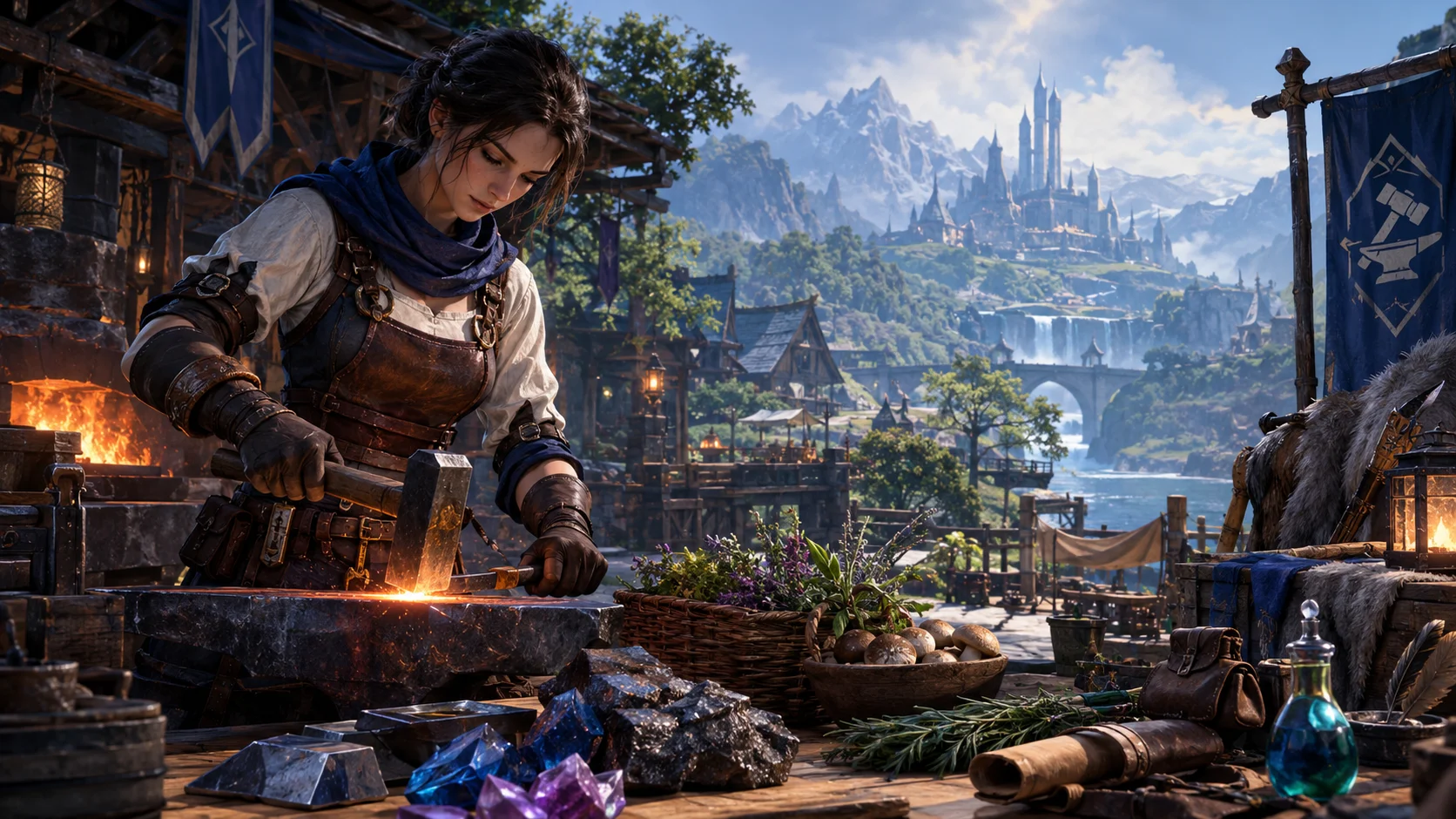
For example, Mining can provide ore that needs further processing before it becomes a useful metal component. Tanning can prepare pelts for leather-related production, while gathered wood may contribute to woodworking or other wood-based crafts. The exact requirements depend on the recipe, so check the complete ingredient list before starting a large gathering run.
These dependencies give refining professions an important role. A player who concentrates on gathering may supply raw materials, while another player processes those resources and a specialist turns the components into finished products. Cooperation can reduce the need for every character to maintain a large collection of skills.
Before beginning a crafting project, identify the entire production chain. Determine which materials come directly from gathering, which require refining, what must be purchased, and whether another profession is involved. You can then estimate the actual effort involved rather than judging a recipe by its final ingredient alone.
This planning is particularly valuable when a recipe consumes several different materials. Discovering a missing component after spending an entire session gathering the other ingredients can waste time that could have been used more productively.
How to Manage Currency While Training Tradeskills
Tradeskills compete with other priorities for your character's resources. During the early stages of progression, class training, equipment upgrades, consumables, and travel may offer more immediate benefits than investing heavily in crafting.
Keep a reserve for essential character development before spending heavily on professions. If training a new rank would leave you unable to purchase an important ability, the purchase may be better postponed. The same principle applies when a crafting project requires several expensive materials but offers no immediate benefit to your character.
Avoid training multiple professions simply because they are available. Each additional skill can introduce more costs, material requirements, and inventory pressure. A focused approach makes it easier to identify whether your investment is producing useful items or simply consuming resources that could have supported your combat progression.
You should also distinguish between personal value and potential market value. An item that saves your character time or improves your preparation can be worthwhile even if it does not generate currency. Conversely, a recipe that produces a desirable item is not automatically profitable if its ingredients are difficult to acquire or expensive to purchase.
Work toward a specific milestone before expanding. That might mean producing a particular item, gathering enough resources for a small crafting batch, or reaching a useful point in your chosen profession. Once you have achieved that goal, review the results and decide whether further investment is justified.
Trading Materials and Finding Buyers
Tradeskills create opportunities for cooperation between gatherers, refiners, and crafters. You do not have to produce every item yourself to participate in the crafting economy. Gathering resources that other players need can be a practical way to contribute, particularly if you prefer exploring the world over managing several crafting professions.
Direct communication is an important part of this process. Ask other players which materials they need, learn what they are willing to trade for, and compare offers before committing valuable resources. Community channels and in-game conversations can help you connect with potential buyers or locate ingredients that would be difficult to gather efficiently on your own.
Do not assume that every item has a reliable buyer or a consistent price. Demand can depend on the current player population, the availability of materials, and which items people are actively trying to produce. Before collecting large quantities of a resource purely for trade, look for evidence that other players actually want it.
Small transactions are a useful way to learn. Start with a manageable quantity, observe how easily it trades, and adjust your gathering plans accordingly. This approach reduces the risk of accumulating large amounts of stock that you cannot use or sell.
You can also coordinate with friends or regular hunting groups. A party that shares information about materials and crafting requirements can reduce duplicated effort, help specialists obtain the resources they need, and make better use of items collected during adventures.
Common Tradeskill Mistakes to Avoid
The most expensive beginner mistake is investing before understanding the full requirements of a profession. Training may feel like progress, but it can leave you short of currency while you still lack the materials, tools, or recipes necessary to produce anything useful. Decide on an objective before spending.
Another common problem is selling every unfamiliar drop. Some materials have uses that are not immediately apparent, especially when they belong to a refining chain or a recipe you have not discovered. Check their purpose first and retain reasonable quantities of resources relevant to your plans.
Crafting without considering the entire ingredient chain can also waste time. If your chosen item requires several components, make sure you know how each one is obtained before committing to production. This is especially important when other professions are involved.
Finally, avoid assuming that a profession or recipe works exactly as described in an older guide. Monsters & Memories continues to evolve, and individual mechanics can change between builds. Verify the current requirements in-game before making expensive decisions based on outdated information.
A Practical First-Session Tradeskill Plan
Your first tradeskill session should be about learning the system rather than maximizing production. Begin by identifying a profession that suits your goals, locate its trainer, and check the available training options. Choose one simple objective that you can realistically complete with the resources and currency available to you.
Next, inspect the ingredients for your selected recipe and separate them into three groups: materials you can collect yourself, materials that require processing, and materials you may need to obtain from another player or vendor. This makes the next step much clearer and prevents you from gathering resources that do not contribute to your objective.
Collect only what you need for an initial attempt, leaving enough inventory space for other loot. When you have the necessary components, verify any tool, station, or skill requirements and complete the crafting process. Take note of the materials consumed and any unexpected requirements you encounter.
Afterward, evaluate the result. Did the item help your character? Was gathering the ingredients reasonably efficient? Did the process cost more currency than expected? Could another profession or player supply one of the components more efficiently?
Use those answers to plan your next session. A successful start does not mean mastering an entire profession immediately. It means understanding one useful part of the system well enough to repeat it without unnecessary costs.
Frequently Asked Questions
Are tradeskills necessary for leveling in Monsters & Memories?
No. Combat, exploration, and group hunting remain important parts of character progression. Tradeskills are an additional system that can help you prepare supplies, produce useful goods, and participate in the player economy, but you do not need to master crafting before progressing through the game.
Can you learn multiple tradeskills on one character?
The available tradeskill system supports several different professions, but you should check the current in-game restrictions and training costs before committing to a broad setup. Even where multiple skills are available, focusing on one primary goal can be more practical for a new character with limited currency and inventory space.
Which tradeskill should beginners choose first?
Choose according to your immediate needs and the materials you can access. Gathering is a reasonable starting point if you want to collect resources, while a crafting profession may be more attractive if you have a particular item in mind. Compare the complete ingredient chain and training requirements before making your decision.
Should you keep all materials you collect?
No. Retain resources that support your current recipes or have a known use, but do not let your inventory fill with materials you are unlikely to need. Check unfamiliar items before selling them, and review your stored supplies regularly so you can prioritize the resources that matter most.
Can tradeskills help you earn currency?
They can create opportunities to trade resources, components, and finished goods with other players. However, profitability depends on demand, material availability, acquisition costs, and the time required to produce or gather an item. Test small quantities and confirm that buyers exist before investing heavily in a particular product.
Do tradeskill guides remain accurate throughout Early Access?
Not necessarily. Professions, recipes, materials, and training requirements may change as the game develops. Confirm important details in the current game before investing significant currency or spending hours gathering ingredients for a specific recipe.
Final Thoughts
Tradeskills in Monsters & Memories reward preparation more than rushing. The most effective starting strategy is to choose a clear objective, understand the materials involved, protect your currency reserve, and learn how gathering, refining, and crafting fit together. You can expand into additional professions once your first setup provides consistent value.
Whether you want to make your own supplies, support other players, or explore the crafting economy, focus on building a useful process instead of collecting skills without a plan. As you become familiar with the available recipes and material chains, tradeskills can become a natural extension of your adventures across Aêthoril.
For more character progression advice, read our Monsters & Memories Leveling Guide and Monsters & Memories Classes Guide. You can also browse our Monsters & Memories services if you want to spend less time on repetitive leveling and more time exploring the game's wider systems.